Monday, September 20, 2021

Freemason's Hall

The Freemason's Hall on Great Queen Street is the headquarters of the United Grand Lodge of England and Supreme Grand Chapter of Royal Masons of England.  Built in the 1920s and early 1930s in art deco style, the building houses a museum with an extensive display of everyday objects, ceremonial objects and regalia with intriguing Masonic decoration and symbols.  

The symbols include the all-seeing eye, the letter G, the square and pair of compasses, the two-headed eagle, the Masonic blazing star, the beehive, the moon, the number 7, the two pillars, and the sheaf of corn.

The museum's intent, in part, is to dispel popular myths about Freemasonry.  It is not a religion nor does it favor one religion over another.  Its roots lie in the traditions of the medieval stonemasons who built Europe's great cathedrals and castles.  While the museum states that Freemasonry is not a secretive society,  I find it, nevertheless, weirdly enigmatic, especially in the modern world.

Click Here to Learn More


The Grand Master's Throne (1791)

Portrait of King George IV in background
George IV wears the robes of the Order of the Royal Garter

This is one of more than 20 lodge rooms in the Freemason Hall.


Symbols on an apron may represent rank and responsibility


The Barraclough Clock from the 1800s
with Masonic Symbols


Portrait of Grand Master John James Howard Coe 1819
A sideboard with mysterious symbols


Decorative Mason Box
To hold the jewels and aprons of a Freemason

Clock with Freemason Symbols

Glassware from the 1800s
with Masonic symbols


Josephine Baker was a Freemason in France


Freemason Hall in London

Sunday, September 12, 2021

Edwardes Square, The Argentine Ambassador's Residence, The Caledonian Club & The Marble Arch Mound

London has more than 300 garden squares, for the exclusive use of individuals who live on those squares. Edwardes Square in the Borough of Kensington & Chelsea was laid out in 1820.  Today we were invited inside. Open to the public as part of London Open Gardens 2021 Festival, we explored its wooded glades, rolling lawns, and serpentine paths. 


Located at 49 Belgravia Square, the Argentine Ambassador's Residence, built around 1851, participated in this year's London's Open House Festival. In 1936 the historic building was acquired by the Argentine ambassador, along with its furniture and paintings.  Today much of the house still looks like it did in 1936. It's an imposing almost-spooky house with big doors, big windows, and very high ceilings.


The Caledonian Club is a private club founded in 1891 as a meeting place for Scotsmen in London.  Also participating in London's Open House Festival, we took a guided tour.  The original club building in London was completely destroyed by a bomb in WW2 and the present club is now housed in a historic building in the upscale Belgravia neighborhood.


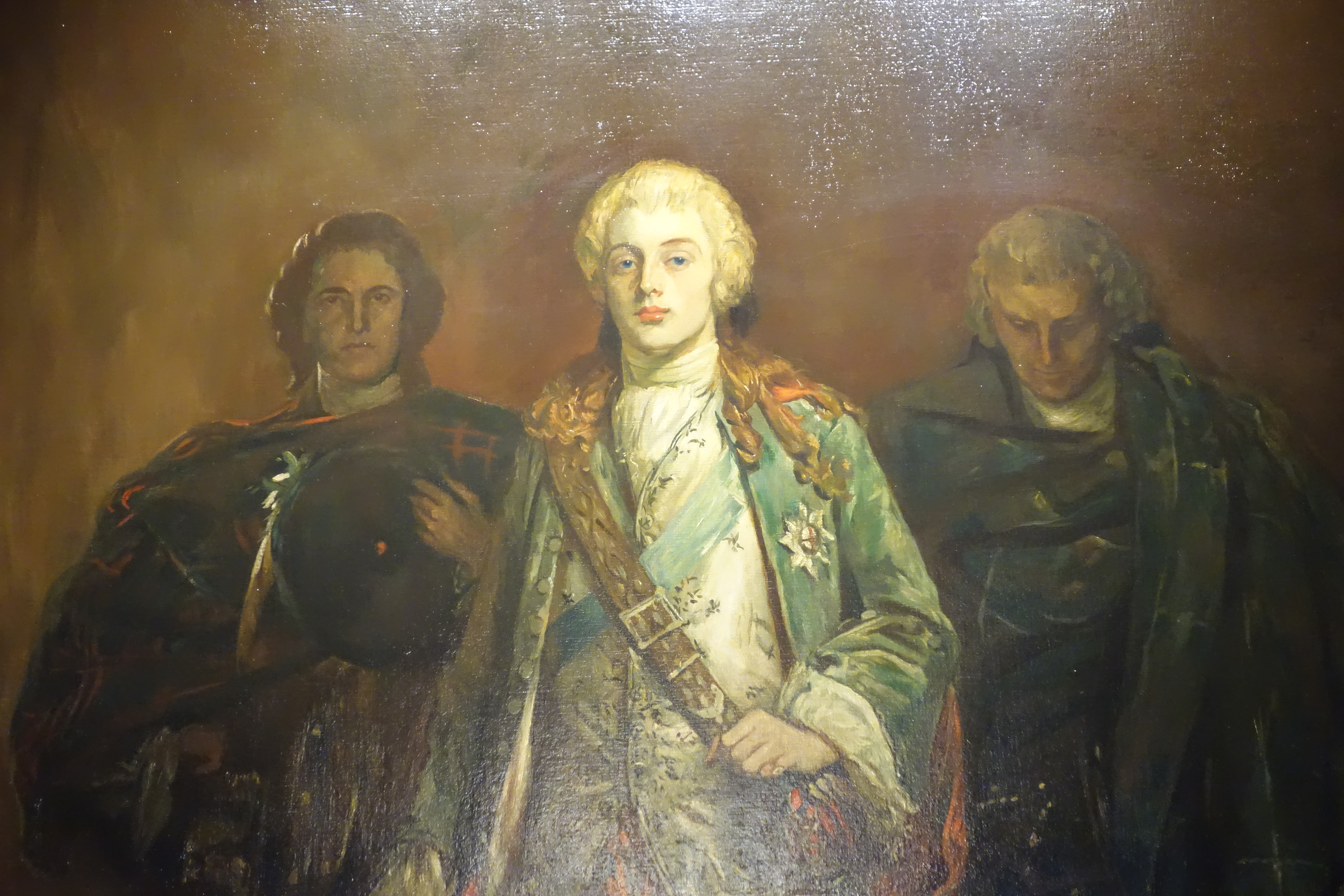
Bonnie Prince Charles

Taking a wee nap


Her Majesty the Queen


Robert Burns


WW1 Memorial
Of the club's 600 members, 300 were killed in the war

The Caledonian Club

The Marble Arch Mound is London's newest free attraction. One walks up numerous metal steps to the summit for some interesting views. Under the Arch Mound is an art exhibit involving specialized glass and LED lights creating infinity spaces.
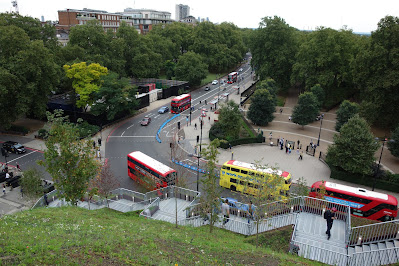
View from the Marble Arch Mound